
Bottom Seal Profiles
Retainers and seal profiles vary between doors. The replacement needs to match the hardware and fit without interfering with smooth movement or safety reversal.
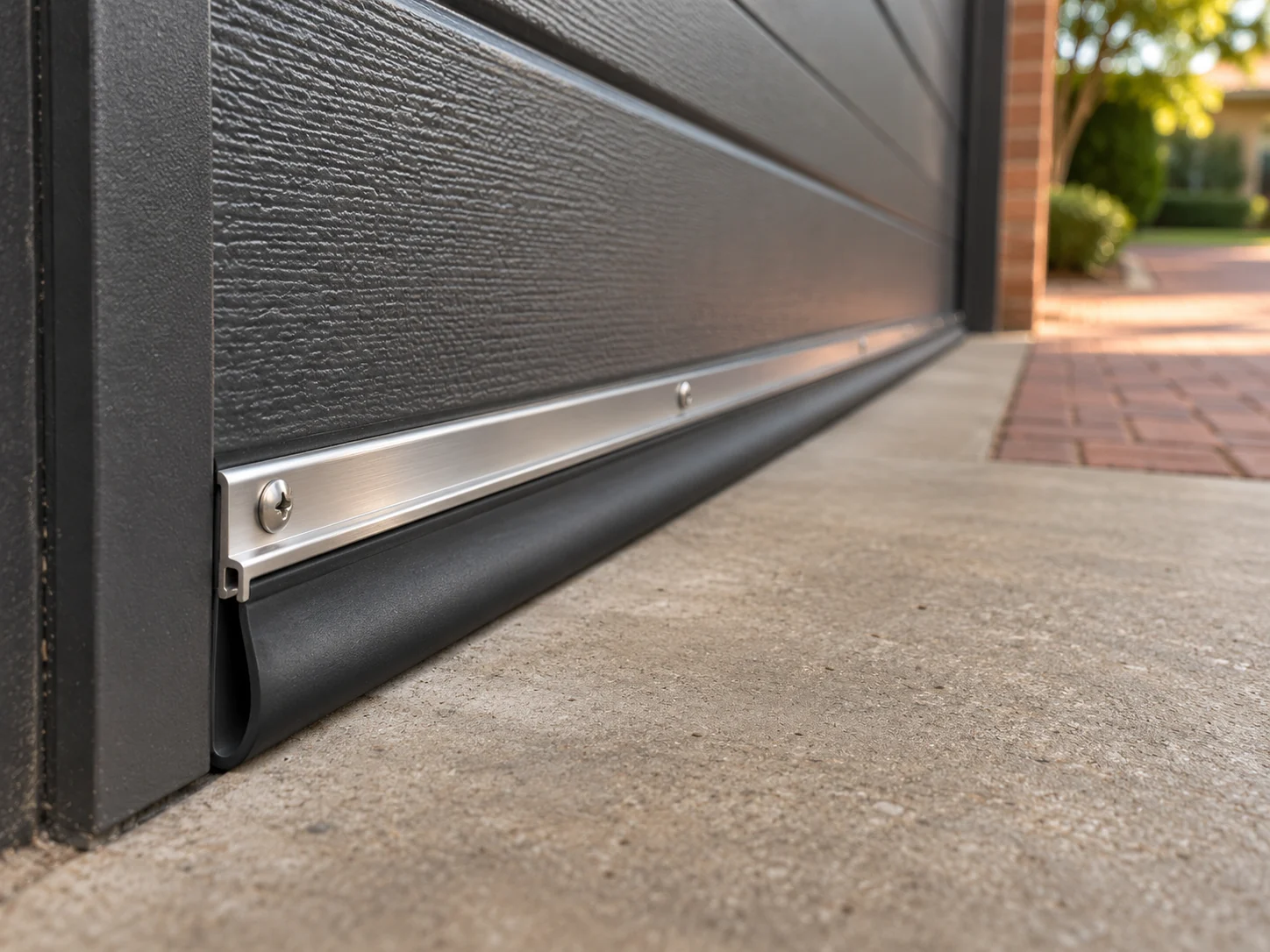
Weather Seals
Review bottom seals, perimeter weatherstripping, and visible gaps to improve the garage door’s fit.
Close The Gaps Around Everyday Life.
A good seal is a small detail with an everyday impact. Worn weatherstripping can leave gaps for drafts, dust, and wind-driven moisture. Redjamb reviews the door’s fit, floor conditions, and existing seal profile before recommending a practical replacement or adjustment.
Not every gap is a seal problem. An uneven slab, door alignment, damaged panels, or incorrect travel can prevent proper contact. The best starting point is to identify where light or debris enters and whether the gap changes as the door closes. A seal should not hide a mechanical problem.
Discuss Weather Seals
The Details That Matter
Retainers and seal profiles vary between doors. The replacement needs to match the hardware and fit without interfering with smooth movement or safety reversal.
Perimeter weatherstripping should meet the door appropriately without excessive drag. Material condition, exposure, and the surrounding trim can affect the replacement scope.
A threshold may suit some conditions, but drainage and floor slope must be considered. Garage door sealing is not a flood barrier and cannot correct every water-entry problem.
Working Together
Review symptoms, equipment, access, and the outcome you want.
Explain the options, parts, responsibilities, and work before proceeding.
Carry out the agreed work and review operation and safety features.
Make An Informed Choice
Better sealing can reduce visible gaps and everyday debris, but the whole garage enclosure determines air leakage and comfort. Discuss the actual problem rather than assuming a specific energy saving. Water entry that originates from drainage or construction conditions may require another trade or a broader property assessment.
Talk Through Your OptionsBefore We Visit
Share what you know without trying to investigate a potentially unsafe condition. We can discuss the next step from a description of the concern.
Your Questions, Answered
No. Door seals can help with ordinary exposure, but floor slope, drainage, wind, and construction conditions matter. They are not designed as a flood-protection system.
A crooked or unevenly traveling door needs mechanical assessment. Weatherstripping should be addressed after the door is operating correctly.
Condition matters more than a fixed schedule. Cracking, gaps, brittleness, or material pulling away are useful reasons to have the seals reviewed.
Keep The Whole Door In View
Address worn rollers, damaged track, and uneven movement with a system-focused repair plan.
Explore ServicePlan routine professional care around door condition, usage, and manufacturer guidance.
Explore ServiceRepair, replacement, and maintenance planning for commercial sectional doors and working properties.
Explore ServiceLet’s Make The Next Step Simple
Tell us about your door, your property, and what you want to improve.